Next Stop, AI Search: How SEOTesting Helped hoppa Build Pages for AI Search and Prove the Impact
Download the PDF version here
Challenges
hoppa is a global ground transportation marketplace, bringing pre-booked airport transfers, ride-hailing and shared shuttles together in one platform. Alex Galinos, Director of Acquisition at hoppa, oversees paid search, AI search, SEO and paid social.
hoppa runs a large destination page estate across Europe and the Americas, and one activity does more for organic performance than any other.
“Our highest leverage SEO activity is content decay recovery on our airport landing pages: refreshing a page once its organic performance starts slipping.”
SEOTesting’s tools have become an integral part of how we run content updates now, not an occasional aid we dip into. They sit inside several different parts of the process at once - research, briefing, evaluation and testing.
 Alex Galinos
Director of Acquisition, hoppa
Alex Galinos
Director of Acquisition, hoppa
hoppa is expanding an AI-assisted content programme into new destinations, and the risk in scaling content is that impact becomes assumed rather than demonstrated.
“A key priority is scaling content production without losing quality or measurement discipline. Every page we touch needs a before/after test attached so impact is provable.”
The previous process involved manually pulling Google Search Console performance data for the page, pulling Ahrefs keyword data for the destination, then working through SERPs and “People Also Ask” by hand for the long-tail and conversational sub-questions the page needed to cover.
It worked, but it didn't scale
hoppa is seeing lower click-through rates on navigational brand queries where AI Overviews appear. Longer, conversational transfer queries are also increasingly being answered within an AI Overview, without generating a visit to the site.
“That’s pushed us to write pages structured to be easy to cite from, not just to rank for.”
Alex explains that there is now a need to use clear question-and-answer formats, providing specific details on price, route and timing, and writing headings in the way someone would naturally ask an AI assistant, rather than the way they would type a query into a search engine.
Another challenge sat outside the content work entirely. Alex reports on organic performance to the business every month, and the numbers for that section had to be assembled manually each time.
“That section came from manually compiling the equivalent Google Search Console figures myself every month.”
The report itself provided valuable strategic guidance, but compiling it by hand each month was repetitive and time-consuming.
Solution
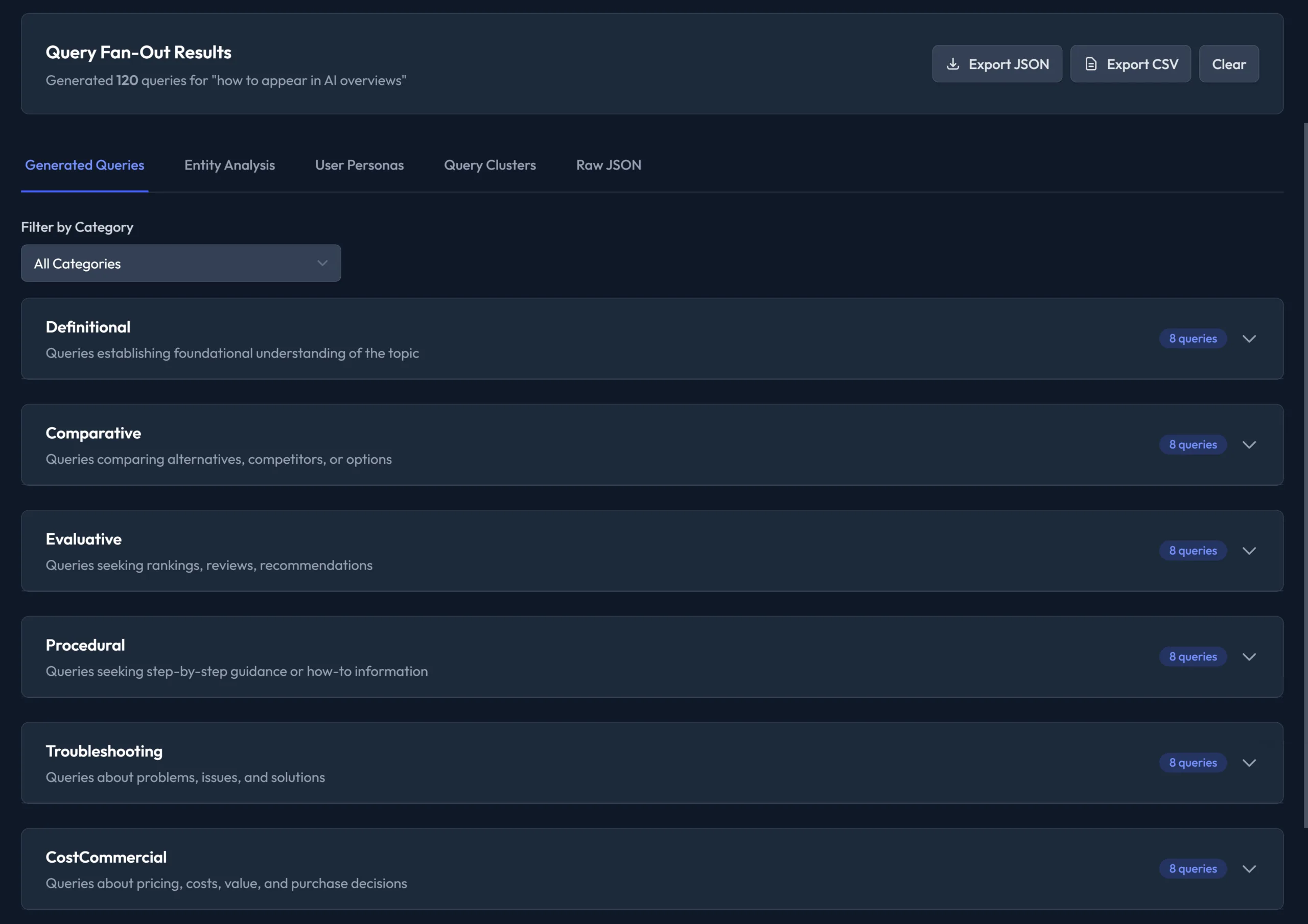
hoppa’s process begins with SEOTesting’s Query Fan-Out Generator. Starting with a single destination keyword, the tool produces a broader set of synthetic queries organised by intent, helping the team identify the conversational follow-up questions a page needs to answer if it is going to be useful – and potentially cited – in AI search results.
“The fan-out tool fits that shift well, because the synthetic queries it produces read much closer to how someone prompts an AI assistant than a standard keyword list.”
The first page to go through this process was hoppa’s JFK destination page. The team began by reviewing its Google Search Console performance data and Ahrefs keyword data for searches related to New York and JFK, before running the primary keyword through SEOTesting’s Query Fan-Out Generator.
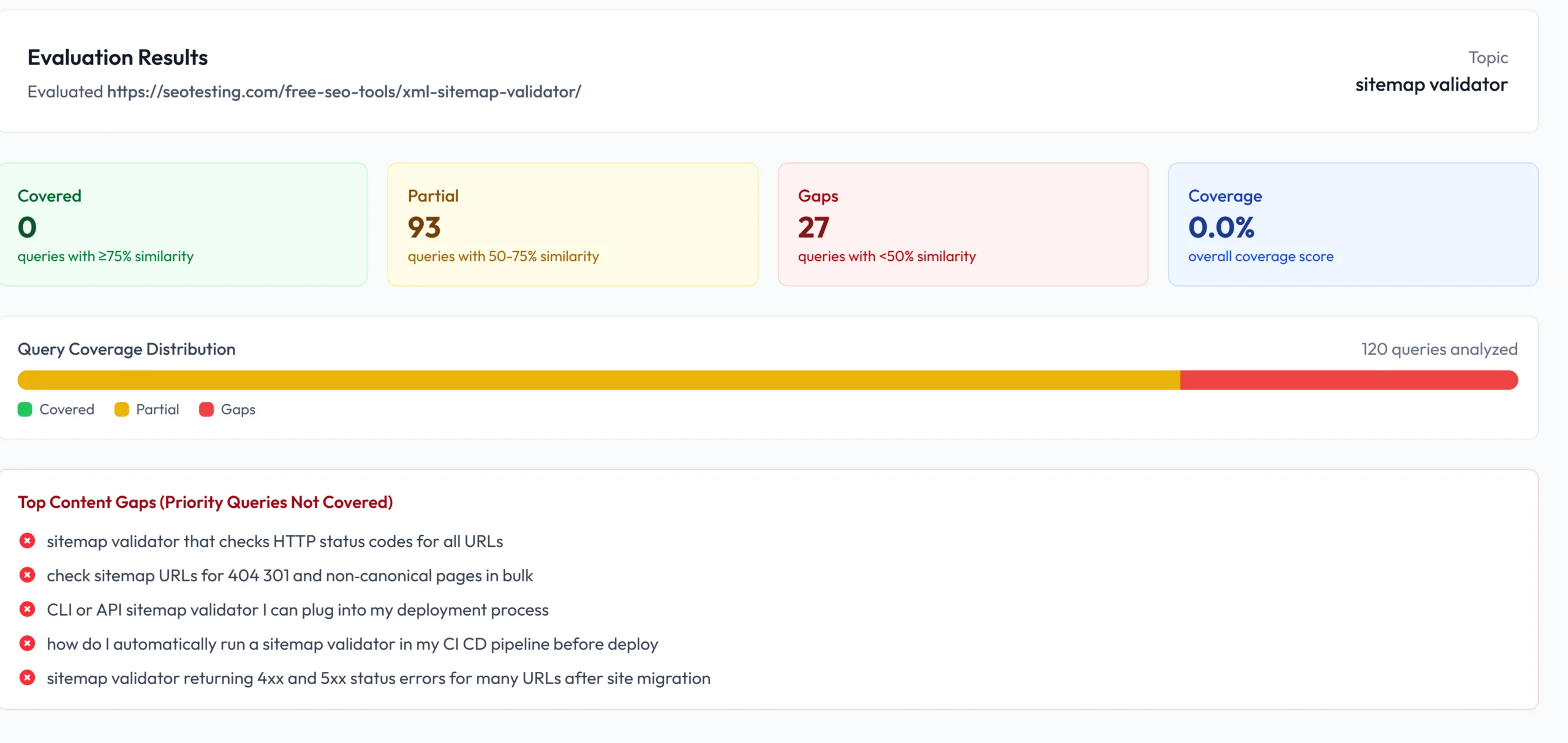
Alex describes how hoppa then uses the Content Evaluator within SEOTesting, which removes the guesswork that made the old research step unscalable.
The live JFK URL is scored against the fan-out output, giving the team a structured way to assess content gaps rather than relying on an analyst’s judgement.
“It doesn’t just tell you a page feels thin, it tells you exactly which fan-out queries are covered, partially covered, or missing – turning a subjective judgement into something closer to a checklist.”
Those gaps, combined with the Google Search Console and Ahrefs data, become the content brief – drafted with Claude, refined manually, then published.
Day to day, the biggest change is structural. SEOTesting’s AI SEO tools have brought a multi-platform research process together before a page ever reaches a writer.
Alex accesses the tools through SEOTesting’s MCP Server within Claude, where Google Search Console data via SEOTesting, Ahrefs and BigQuery already sit within the same workflow.
“We can pull performance data, keyword gaps and the fan-out itself in one continuous flow instead of three logins.”
The workflow runs end to end: each airport landing page goes through SEOTesting’s Query Fan-Out Generator and Content Evaluator, is rewritten against the resulting brief, and is published with an SEO test attached. The automated end-of-month report then supplies the organic performance figures.
Results
With Google Search Console and Google Analytics connected, hoppa could measure not only search performance, but purchases and revenue too.
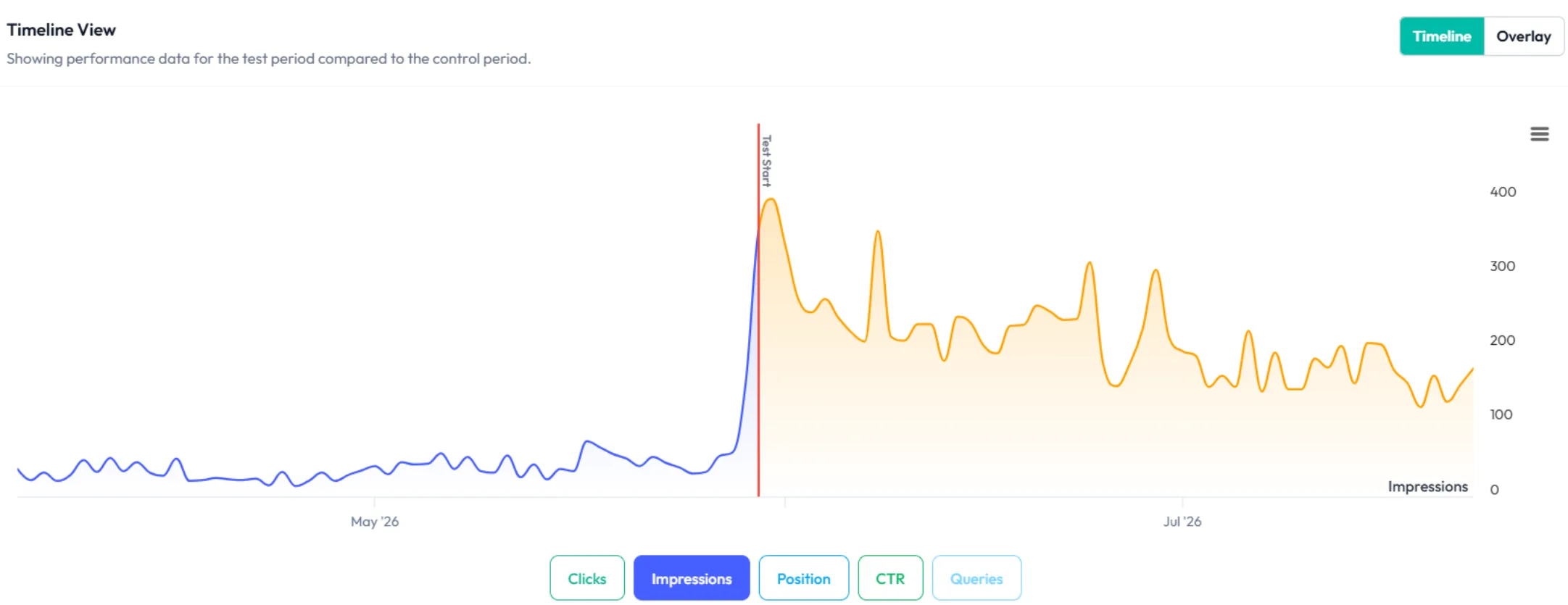
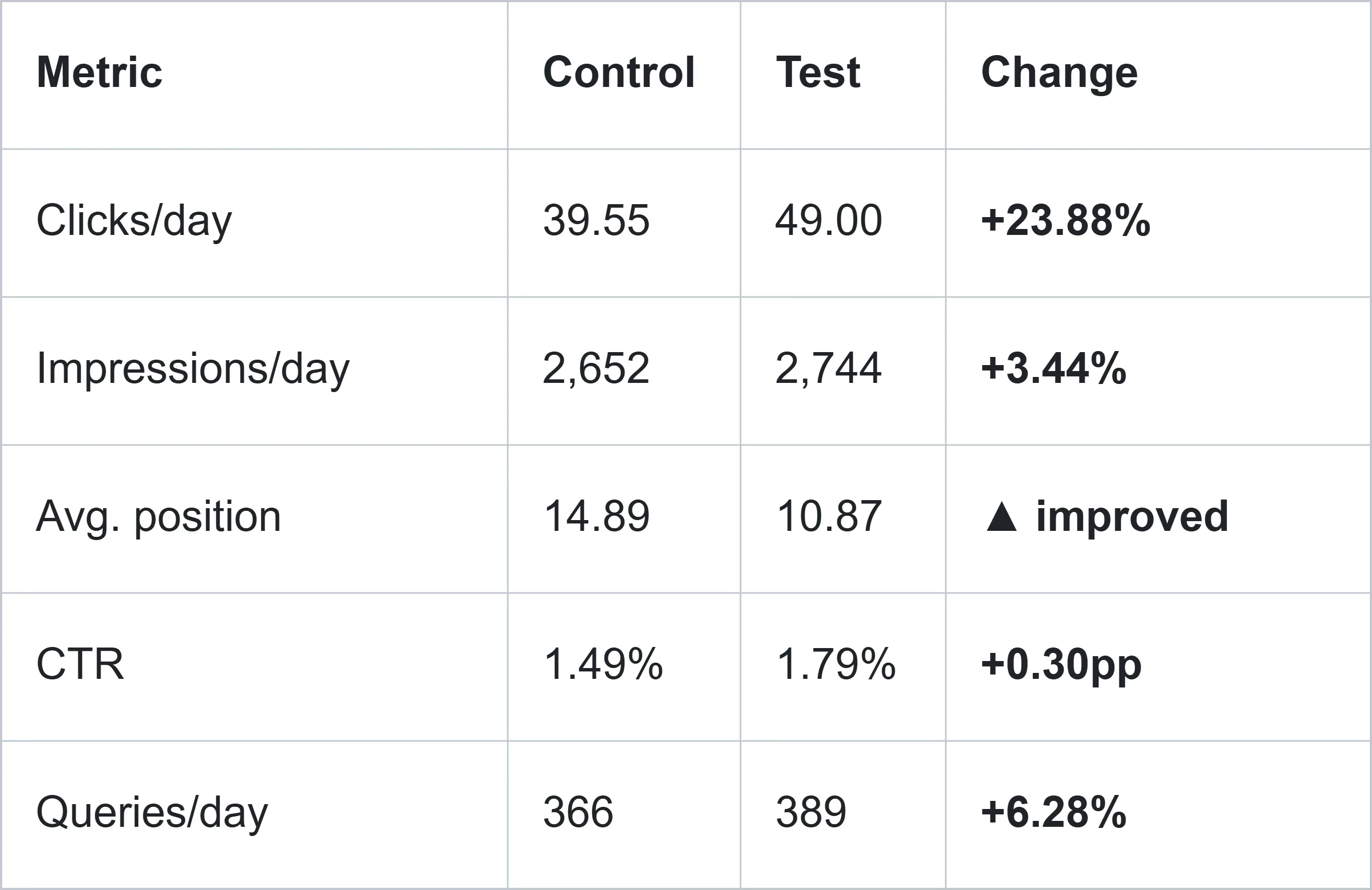
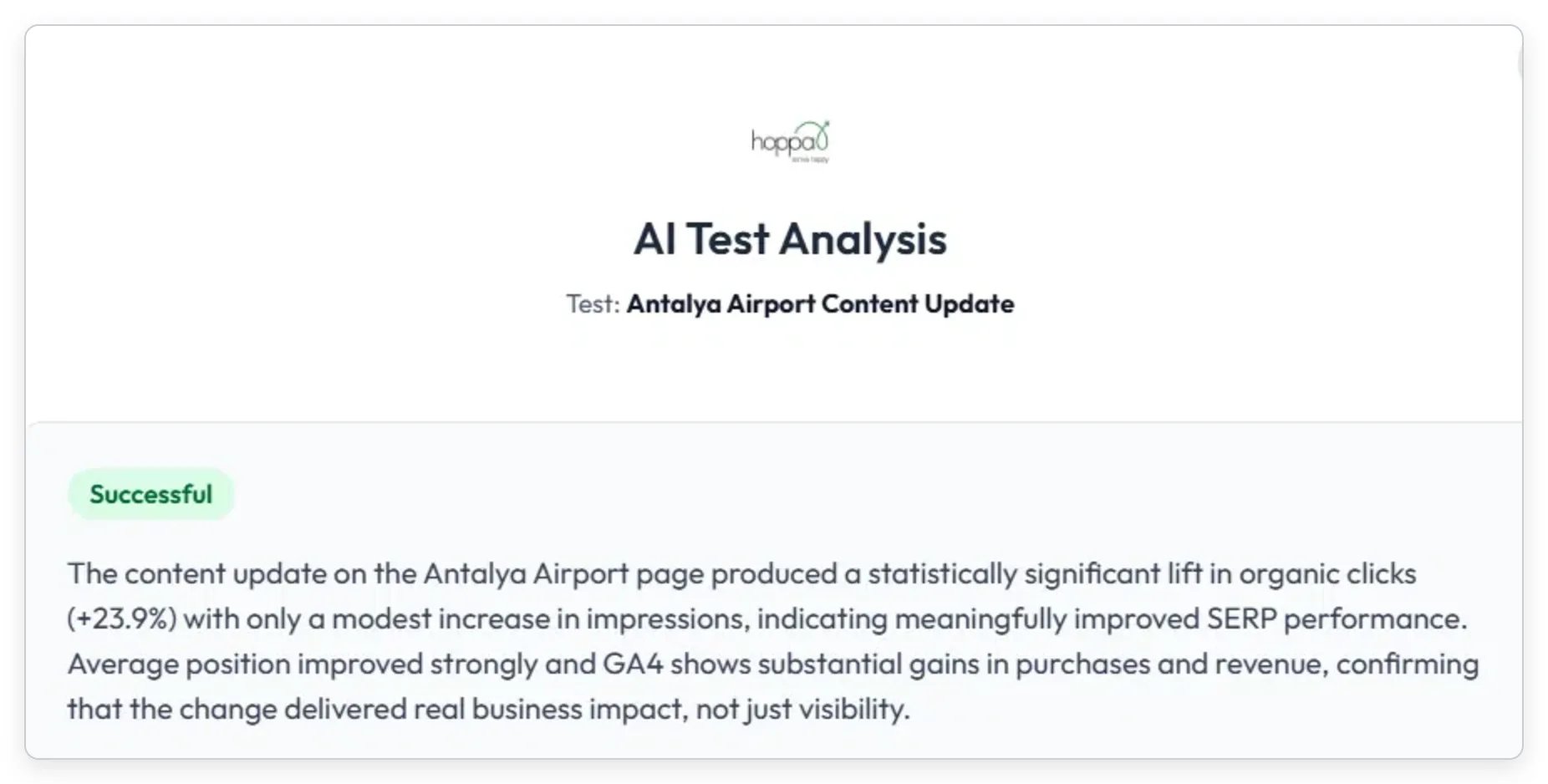
Across the wider content update programme, the refreshed pages added 2,284 net organic clicks, with organic purchases up 24.9% and revenue up 20.1%.
+20.1% organic revenue
Of hoppa’s recent SEO tests based on the updates, 76% showed positive results.
“The traffic losses are concentrated entirely in older, untouched destination templates.”
The overall result is a faster, more repeatable workflow that turns AI-led research into measurable gains for the business.
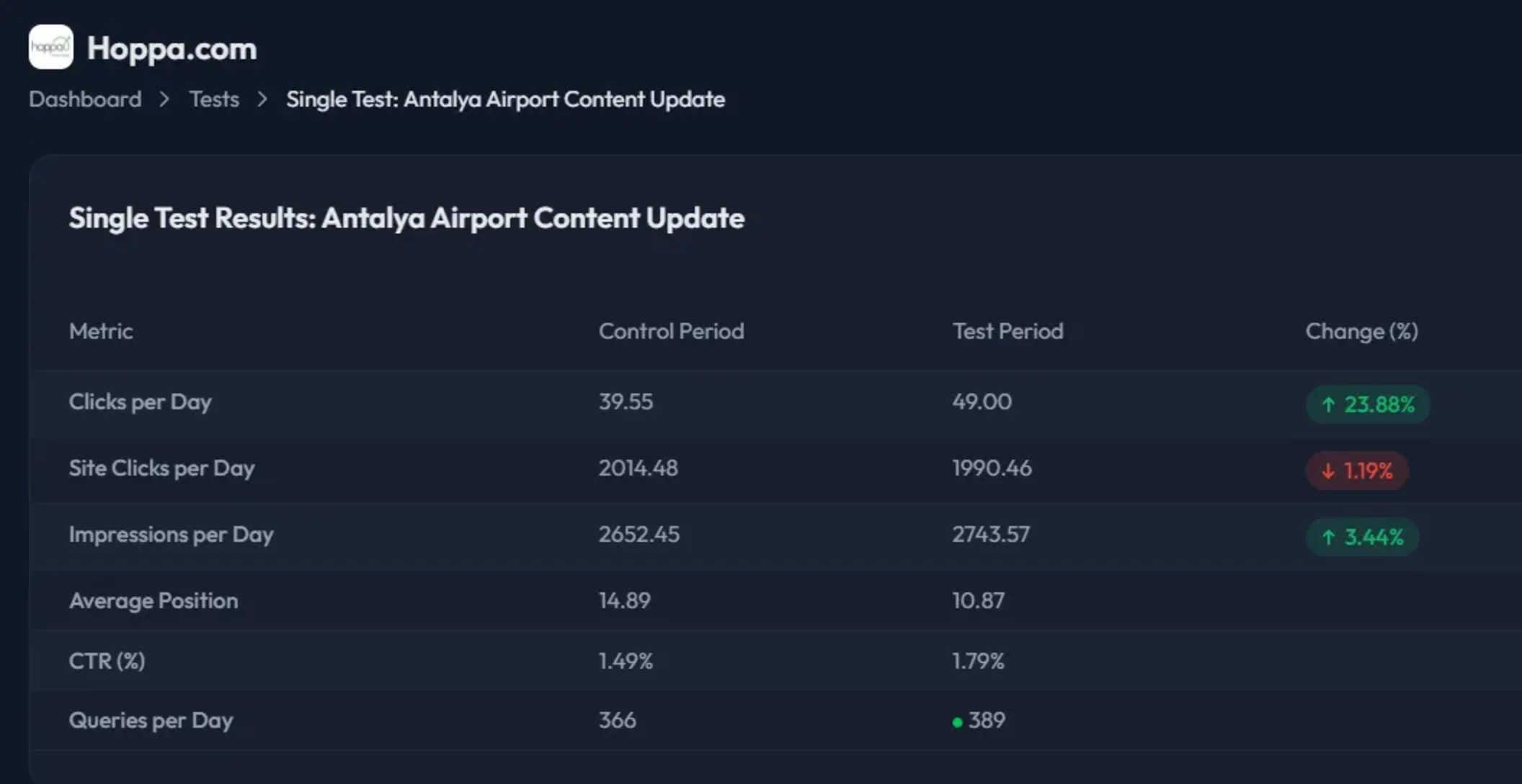
Use SEOTesting’s AI SEO tools to identify what each page needs, then run an SEO test to measure and prove the impact of every update. 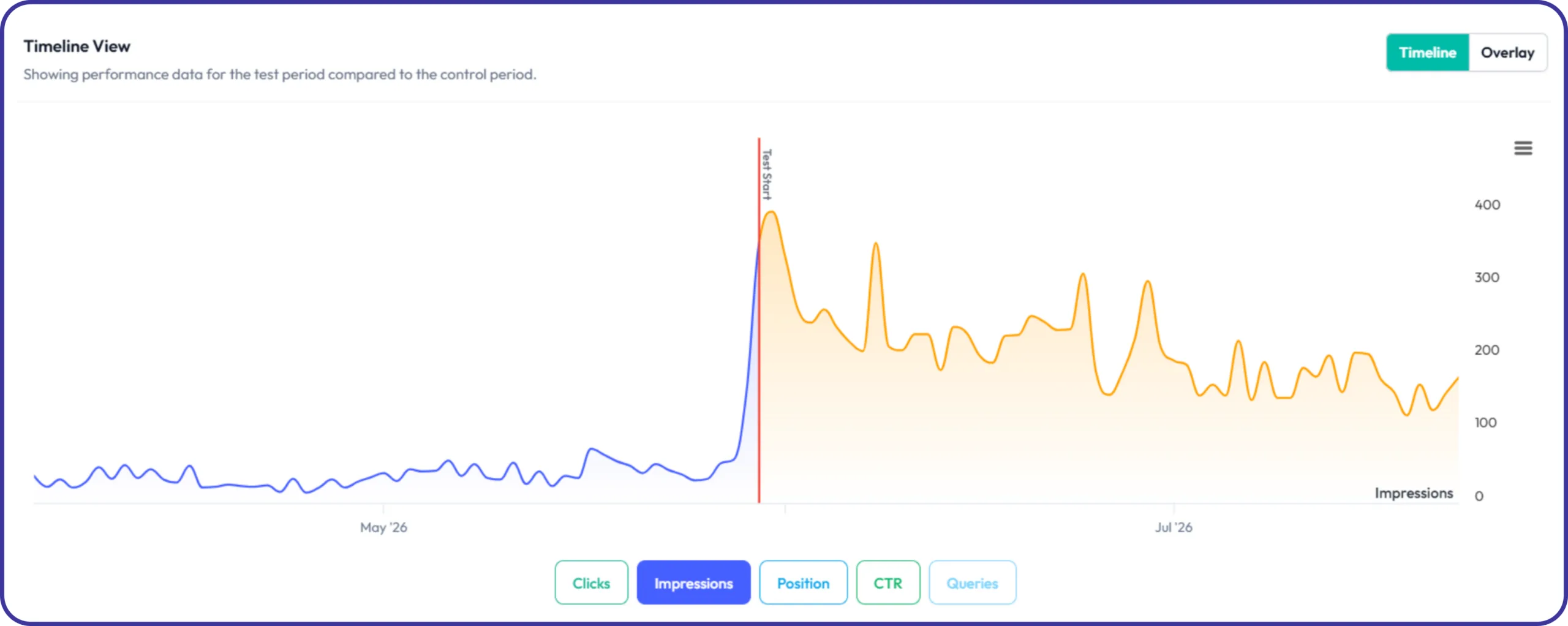 SEOTesting example: one of hoppa's time-based tests
 Josh Willet
Digital Marketing Consultant
Josh Willet
Digital Marketing Consultant
 Pieter Serraris
Digital Marketing Consultant, OMcollective
Pieter Serraris
Digital Marketing Consultant, OMcollective
 Helen Freeman
SEO Manager, Domino's
Helen Freeman
SEO Manager, Domino's